Deprecated: ProcessWire\MarkupQA::__construct(): Implicitly marking parameter $page as nullable is deprecated, the explicit nullable type must be used instead in /var/www/vhosts/veravandeseyp.com/type.veravandeseyp.com/wire/core/MarkupQA.php on line 74
Deprecated: ProcessWire\MarkupQA::__construct(): Implicitly marking parameter $field as nullable is deprecated, the explicit nullable type must be used instead in /var/www/vhosts/veravandeseyp.com/type.veravandeseyp.com/wire/core/MarkupQA.php on line 74
Deprecated: ProcessWire\MarkupQA::findLinks(): Implicitly marking parameter $page as nullable is deprecated, the explicit nullable type must be used instead in /var/www/vhosts/veravandeseyp.com/type.veravandeseyp.com/wire/core/MarkupQA.php on line 623
André Burnier is a Brazilian graphic designer and creative coder. In this interview, he discusses his journey into the world of coding, the importance of designing his own tools, and the intersection of graphic design and coding. He also shares insights into his approach to translating visual elements into systems and the challenges of bridging the gap between graphic designers and developers. Additionally, André explores his experiences with AI technologies, his thoughts on the NFT era, and how he navigates creative blocks. Read the full interview for an insight into André's work and perspective.
Hi André, can you briefly introduce yourself?
Yeah, my name is André Burnier. I’m a Brazilian graphic designer. I graduated in graphic design here in São Paulo at FAAP. Later, I did a master’s at the AKV St. Joost in the Netherlands, where I graduated in 2016. Ever since I came back to Brazil, I have been diving into creative coding. Nowadays, I mostly work as a creative coder. My research is a mix of graphic design and creative coding.
When did you start coding, how did that happen?
I had very basic classes back in my master’s. They were between 2014 and 16, but they were very brief. I really started to dive into coding after I came back by the end of 2016. The first classes were in Processing. We had—I don’t remember how many classes—but it was very few. After that, we had to teach the bachelors a little bit of Processing basics. Teaching was a very nice way to learn those basics. But I didn’t dive into it at that time. The first steps were very hard, and it was a little bit frightening. My master’s thesis also had nothing to do with coding. But after I came back, I realized that there’s a lot of potential here that I can tap into. And I started to study by myself, basically, creative coding. Actually, the Coding Train is how I started!
I want to talk today about tools, like making tools in your work because you do quite a lot of that. Can you tell me how you started doing that and why?
Yeah. I had a teacher back in the Masters, Peter Matthias Noordzij. He always said to design your own tools. That resonated with me a lot. And coding is a very, very powerful tool because you’re able to design your own tools with it. Making tools felt like a natural path, rather than something I was planning to do. Naturally, when I’m designing anything with code, it leads to a tool because someone needs to use it. If I’m using it by myself, it is a tool either way, but it doesn’t need any user interface. But when I’m designing for someone else, it does need to become a more elaborate tool. The natural pathway of designing with code; is that it leads to a tool in the end.
The tool itself exports something that designers can use. And it’s because it’s parametric, right? When you write code, there are things you can change. The powerful thing about working with code is being able to design something that outputs many different sorts of different things. When you change some parameters, you can have different outputs. It doesn’t make sense to code that outputs just one thing; it is too much work.
But the powerful thing about working with code is exactly this. You do the work once, and then there are so many different outputs possible with it. A tool is a nice way to make this viable: trying out different outputs with the same code and the same system behind it.
Yeah, that makes sense. One of the first things I saw in relation to the tools you built was the type torture tool series. Please tell me about that, and whether it influenced the work you’re doing now.
It wasn’t something planned, per se. I remember I saw people who were starting to work with motion and type. Especially Zach Lieberman, who was working with some typography at the time. I thought to myself: “This is really cool. I want to try it out myself.” I got really inspired by it. But I realized quickly enough that there were no tools made for that sort of work. So I had to construct my own tools to be able to design the things I wanted.
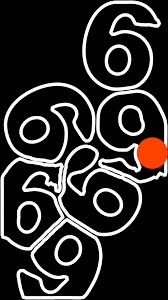
The transgression of breaking type really felt cool. This is something you usually don’t see because type designers can be so strict and follow the rules. For good type, you have to be perfect and design the perfect curves, spacing, and so on. It felt like it was something to be explored. When you break those rules, you don’t care about them and just trying to work typography as a texture; typography as a canvas to achieve something else. I wasn’t planning to torture type, but it was a fun way to frame it. “Hey, I’m a type torturer. I like breaking type in subversive ways.” And, you know, it was a natural thing.
When I started, it was just some basic 3D distortions. I realized I could do so much with type just by moving points around. So it naturally developed into experimenting with all the possible ways I can break typefaces using the system that I was designing at the time. I still play with it today; it became my artistic identity. Even professionally, it happened a few times that people asked me to break some typefaces, although they usually ask for something less experimental.
The name is great because it helps abdicate you from any type design rules. It lets you take a stance: “I’m not doing any of that. I’m actually breaking it all down”. So that name really makes sense for what you’re doing.
You mentioned becoming known for breaking type. What do you think is inherent to your work, regardless of whether other people know you for it?
My specialty nowadays is translating something that a designer did into a system. Designers approach me nowadays with an identity, a pattern, or another visual element, and we need to make a system out of it. Sometimes, that can be complicated because graphic design is very subjective. And this subjectivity is hard to convert to a system for a computer. Computers are not subjective at all; they are really objective. This conversion is my main specialty nowadays.
My differential is being a decent graphic designer and knowing how to code as well. Because most developers are not graphic designers and vice versa. This is a really big struggle between graphic designers and developers. Developers don’t have the sharp eyes to work as graphic designers in general.
They also speak different languages and have different ways of looking at the same thing. But you have a foot within both worlds.
I’m like a bridge because I know how to communicate with graphic designers, and how to communicate with a computer.
Do you feel like sometimes you have to stop misunderstandings from happening? Are you translating messages between design and code?
Yeah, I translate images into code, that is my main work nowadays. For instance with the Rio Carnival project. The designers worked on it for a couple of months before I got involved. One of the team members knew me, and they sent me an email. “Hey, we’re trying to animate this logo, we want to make it dance. But that is almost impossible with traditional software. With After Effects, we’re not being able to do that properly. Could you make a system out of it? That way, we can experiment, we can make it move and dance to the music.”
I was very afraid at the time, because the design office, Tatil, is probably the most important office here in Brazil. And Carnival is the most important event in Brazil, too. Even though I was scared, I responded “Hey, yeah, of course, I can do it.” I had no idea if I could, but yeah,” I can do it.” It was a very interesting project, because when I joined, there already was a visual direction. But they had no idea how it would behave, how it would move, how it could have colors over time. They had a sketch, but they didn’t know how would actually behave. So we started to code the system.
In the beginning, I showed them a proof of concept of a moving sketch. It got them really excited about the system, and this changed the project’s direction. In the beginning, I was trying to copy what they sketched. But then I moved away from what they had been sketching. They told me, “Let’s forget the sketch. Your program is going to guide us to whatever the end result might be.” And that was really, really nice and a brave choice of them at the same time because everything was so experimental at this stage. It was also the first big project that was working on with a big team. I was not even able, at the time, to make a UI. Everything interacted with the keyboard, to the point that all the keys on the keyboard ran a command. Things like changing the stroke, changing the speed... It took a couple of months, but the final tool was a really nice project.
It’s a really beautiful translation. I’ve never been to Brazil and the carnival, and it makes me want to go!
Do you ever release tools that are open to the public to use?
No, not really. I should start doing that. I’m seeing other creative coders doing this, and I’ve been thinking about it a lot. The moment I started to work with the code was when NFTs started to pop up. I didn’t want to have my work stolen by someone who sold it as an NFT after just changing the text, the typeface, or the colors. I have this terrible mentality from that comes graphic design; being very protective over one’s work.
That’s not necessarily terrible. It’s interesting if you both have a design background and you know how to program, and the mentalities of these disciplines clash. From a design background, generalizing here, it’s more common to protect your work as intellectual property. And if you see someone copy it, that’s not good. Whereas with coding, the general approach to that is very different. Do you ever feel like that conflict happens internally, and what do you do about it?
I feel this conflict all the time, within myself at least, because I feel that the coding community's mentality is beautiful. They teach each other by open-sourcing everything, and you can download code that someone else made and change it for yourself. I think that is very beautiful, and it’s a powerful way to teach people how to code by having a lot of code available to explore.
When I started coding, I had already been a graphic designer for almost 10 years, and I was very protective of my work. I feel a little bit guilty because I don’t collaborate with the coding community as much as I should; I want to start doing a little bit more. I’ve thought about it often, and I still have this guilt—maybe I need to take it to therapy.
Both of those are valid approaches to practice. However, it’s challenging to publish tools and make them viable, and it doesn’t always work out that way, which helps create this duality.
Unfortunately, I usually can’t send my professional work out into the world. I wish I could. I made a lot of tools, and I haven’t even shown most of them to anyone apart from my client. I don’t post that much of my professional work—just the more relevant experiments. Yeah, more experiments. I feel like I’m usually posting but the stuff I do professionally, only the most interesting stuff I post, but I do a lot of stuff that I can’t unfortunately share in public. I share privately, for clients, when they ask me “Hey, can you share some of the tools you’ve made?” Yeah, of course, I have a few that I can share with them. But usually, it’s not something I can show to everybody, because of Non Disclosure Agreements (NDAs).
You started coding around 2016, which is eight years and counting. How do you feel your approach to that part of your work has changed in the past two or three years, with the arrival of Copilot and ChatGPT? Did that change it at all?
It changed a little bit. I’m using Copilot nowadays; it’s a very interesting tool. It changed two main things for me. First of all, I feel a little more comfortable dipping into stuff that I wouldn’t know how to code. For example, shaders are very difficult to code, but with Copilot, I feel a little bit more comfortable starting projects with technologies that I might not be proficient in. With Copilot, maybe I can figure it out.
The second improvement is being able to work a little bit faster—just a little bit, not too much. For instance, sometimes I would waste a couple of hours researching how to calculate the area of a polygon. With Copilot, you start to type something, and it fills it in. Almost everything is done from there. But it didn’t change the quality of my work. AI made me faster and more comfortable tapping into unknown territories, but it hasn’t changed the structure of my code. You use it as a guide, or it acts like an intern.
Yes, but an intern that’s very good at coding, and very fast—probably much faster than us. I’m also wondering, apart from technicalities: what is possible? Are there any tools that you wish existed, either for programming or for design: anything work-related? Is there a tool that you wish existed? It can be something really small or really big.
Not really, to be honest. The only thing that constrains me in my work is whether I can figure out the stuff I’m doing. Because I feel that code is the primary tool in my practice, and with this tool, you can design anything—almost anything. So I don’t feel like the lack of I wish not really, to be honest, because I’m very comfortable working from the ground, you know, most of the work I do, I’m trying to not use too many libraries, I’m trying to figure out by myself everything from the ground.
So you work with JavaScript if I am not mistaken.
Yeah, most of it is professionally JavaScript. Nowadays, I also explore shaders, but I mostly work with JavaScript through the browser because it’s the easiest way to exchange with clients. I can send them the link, and they can try it out on their own computer. And if I need to update it, I just update the link. It’s very nice for the process of designing with someone else—to share just the link is way easier than sharing a program or executable. But most of the stuff I post on Instagram is Processing.
It’s fun to dip into different languages at the same time because they have differences. It’s nice to figure out different solutions for the same problems within different languages. For example, JavaScript is more malleable, but Java is way more strict.
You mentioned that you were scared that someone would steal your work in the NFT era. How do you feel about recent developments such as generative AI and large language models like chat GPT? Do you ever feel anxiety over new technologies and how they influence your work? Or do you feel more confident this time?
I do not feel confident at all. I feel like I’m going to be substituted in 10 years and probably need to find something else by then. That makes me very anxious.
I remember that when NFTs were starting, an artist friend tried to encourage me to participate. I told her I didn’t feel like an artist; I felt like a graphic designer. I didn’t feel comfortable selling my work. She became a millionaire! I was afraid of people stealing my work, but it never happened.
I’ve seen works that might have been inspired by the stuff I do. But since I don’t publish my code, no one really stole everything. Anyone can try to reproduce what I do. And if they do, good for them! I’m happy when someone else comes to me with questions, like, “Hey, I’m trying to figure out how you did this.” I’ll help them most of the time. And as long as they’re writing their own code, not exactly copying what I’m doing.
And as long as they’re respectful.
Yeah, of course. I am super afraid of AI developments. Especially the social consequences. I’m less anxious about my work because I feel I have a little bit of breathing room before I have to figure out what else to do. I never really tried working with AI myself, you know, like you did, for example, working at coding.
The training of an AI to something is not something that I am into. Every time I looked into it, I saw how that process was too complex for me. I’m a more basic-level programmer: I feel like a junior developer, not a senior developer. AI feels too complicated for me.
It’s more like wanting to spend a lot of time collecting data. In a way, a lot of the work when training an AI is more something an intern would have to do.
What do you do when you have a creative block? Is there anything that helps to get out of it?
I feel like I live in a creative block all the time—most of the time. If you see how much I post on my Instagram, it’s like once a month nowadays, just because I have to post something. It’s some it’s twice a year. That’s, that’s a lot. But whenever I’m into a creative block, I just want to do anything. I just spend my time playing video games and doing something else. I’m the kind of person who, if someone brings a challenge for me, I’ll figure out a way to be creative within this challenge. So whenever someone hires me, I’ll work on it, and I’ll find my way creatively. And I’ve never had a creative block when I’m working. But when I’m doing artistic projects, let’s say something that is not for a client. I do have a lot of creative blocks. Most of the time, to force myself out of it, I’ll just grab an old sketch that I’ve done in the past and start playing with it changing some variables and something else, trying to figure out something new, what I can pull out of it. So basically, I’ll just rework something I’ve worked on in the past. Nice. I’m good at this. But I feel lazy sometimes, it looks very similar to something I’ve done in the past.
I think this is part of being creative. And it’s being able to iterate over something you did in the past.
Do you know the 100 Vases exercise? It’s a story of an assignment where a ceramics teacher divides his class in two, and one-half of the class will get an A if they make one perfect vase, and the other half of the class will get an A if they make 100 vases. And of course, it turns out that the group of people that make 100 vases fast actually do way more interesting work, just because instead of working towards this one perfect thing, they’re just making things. They’re just producing, producing, producing until, by chance, they get into something special. That feels similar to finding an old sketch and working from it, this feels like a similar way where you are just gonna continue on what I’ve been building. So it sounds like a great advice.
Yeah, one thing that is very important for me is not being worried about doing something great. Although I am worried, while I’m thinking, I try to ignore it. And if the final result is not really good, it doesn’t matter. I’ve done it. Post it, whatever. If people don’t like it, that’s too bad. Not being worried about the result is something that I learned in the Netherlands, a very powerful lesson.
That’s a very good advice as well. I think the final question I have for you is, is there any tool you’re working on now or something else that you’re excited about?
I just finished three projects a couple of weeks ago, and I’m waiting for some to get in. So I’m not working on anything at the moment. I’m working on my portfolio, to be honest, which feels like a boring project. Time to find also old sketches again. I know that sometimes I can feel like something is kind of boring, but nevertheless, people love it. I have this gut feeling sometimes that something is not good enough. But I try to ignore it, and not be worried about it. Because coding is like a power for me, whatever I can do with code that is not really easy to do elsewhere is something that is going to be very interesting for me and for most people.