Deprecated: ProcessWire\MarkupQA::__construct(): Implicitly marking parameter $page as nullable is deprecated, the explicit nullable type must be used instead in /var/www/vhosts/veravandeseyp.com/type.veravandeseyp.com/wire/core/MarkupQA.php on line 74
Deprecated: ProcessWire\MarkupQA::__construct(): Implicitly marking parameter $field as nullable is deprecated, the explicit nullable type must be used instead in /var/www/vhosts/veravandeseyp.com/type.veravandeseyp.com/wire/core/MarkupQA.php on line 74
Deprecated: ProcessWire\MarkupQA::findLinks(): Implicitly marking parameter $page as nullable is deprecated, the explicit nullable type must be used instead in /var/www/vhosts/veravandeseyp.com/type.veravandeseyp.com/wire/core/MarkupQA.php on line 623
Workshops
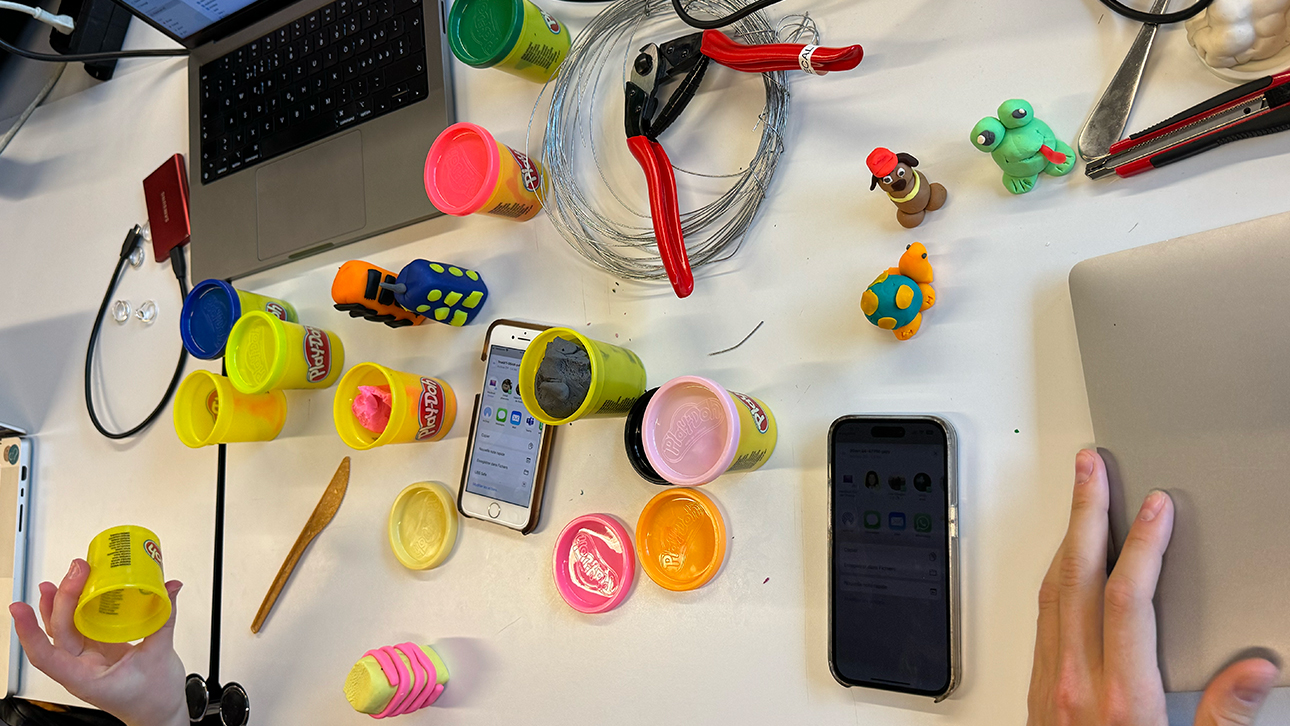
Three workshops were hosted around the three different themes of this project. This method was useful for improving ideas, testing interaction, and experimenting with novel approaches in students’ work. Next to that, it was a great way to better understand possible users for this project.
At the Design Academy Eindhoven, The Netherlands (January 8 – 9, 2024), the focus was on using automation and working with datasets. This activity contributed to the (A) Automation chapter. Twelve students made a data-driven typographic story in two days. https://veravandeseyp.com/workshops/cil/
Deprecated: ProcessWire\Pageimage::extras(): Implicitly marking parameter $value as nullable is deprecated, the explicit nullable type must be used instead in /var/www/vhosts/veravandeseyp.com/type.veravandeseyp.com/wire/core/Pageimage.php on line 1779
Deprecated: ProcessWire\Pagefile::setDescription(): Implicitly marking parameter $language as nullable is deprecated, the explicit nullable type must be used instead in /var/www/vhosts/veravandeseyp.com/type.veravandeseyp.com/wire/core/Pagefile.php on line 428
Deprecated: ProcessWire\Pagefile::extras(): Implicitly marking parameter $value as nullable is deprecated, the explicit nullable type must be used instead in /var/www/vhosts/veravandeseyp.com/type.veravandeseyp.com/wire/core/Pagefile.php on line 1394

Together with artist Yehwan Song, a workshop was held at MICA, Baltimore, United States (February 23–25, 2024) where we practiced gesture (B) interaction to make meaningful typographic stories. https://veravandeseyp.com/workshops/mica/

The third workshop ran at ECAL, Lausanne, Switzerland (April 29–May 3, 2024). This workshop was a further exploration of using (B) gesture as interface, as well as touching upon new avenues (C) creativity. https://veravandeseyp.com/workshops/ecal/



Talks
The talks helped answer “How is the work experienced?”. I was also curious if this project interests people who do not have a type design background. Desirable reactions included:
- Playful and fun
- Stimulates unexpected outcomes
- Makes viewers think about computational creativity
An outline of the project was presented at Multiple Formats, Boston University, United States (March 22, 2023), a fair for graphic designers and publishers. It helped give insight into how this project was received by people in the design field, but not necessarily with an affinity for new technologies.
Another talk was given at ECAL, Lausanne, Switzerland (April 29, 2024). This was a particular group to present to as ECAL hosts an excellent type design master alongside many other excellent programs. The reception was positive, and I stayed in touch with some of the students and faculty for this project.
Finally, I presented the work at the renowned Typographics, New York, United States (June 15, 2024), thanks to Ellen Lupton! As the event is centered around type design, this presentation served as a great moment for connection with the intended audience.


Surveys
How are these experiments received? Test users of different backgrounds and levels of expertise in design and computation were invited to try out the experiments. These users were gathered by filling out an interest form in different contexts, such as during the aforementioned workshops, interviews, talks, and social media.
The primary question for the design evaluation is, “Are the qualities met?” Desirable reactions include:
- The prototypes function;
- Novel ways to approach (A) automation, (C) interaction, and (C) creativity;
- Results in experimental type work;
- Intuitive and spontaneous use;
- Suggesting new contributions;
- Insights on the way the type design practice might change.
This project was initially tested by users with a type and graphic design background. I wanted to ensure that (some of) the artifacts created can offer a meaningful contribution to the field of visual communication. However, the artifacts are open and intended for anyone who has a general interest in typography and design. The hope is that the artifacts eventually inspire a wider audience to think about computational creativity.
Except for (A0), all the experiments were run online. A0 was set up in a way that I could assist switching between the apps. The test user group was between five (A0) to fourteen (B2) qualitative tests per experiment. Summarized feedback, insights and suggestions for innovation were briefly mentioned at the end of each experiment.
On the left is the initial target I set out with and on the right the user feedback. It turned out quite similar, which is great! Interestingly, experiments were deemed more experimental and playful. This was especially the case for experiments in section (B) Interfacing. There was a slight lean to the left in the manual-computational slide, because a lot of the work still had to be done by hand. (A) Automation changed the scale from allround-bespoke further to the center, as people were excited about an all-round application that might influence type design. The experiments were less intuitive to use, especially in section (C) Creativity. And finally, users mapped the work much more in the future, with only one test user selecting a value near the present.
Online publication
All the content of this work is shared as an online publication. I hope this contributes knowledge to research in the intersection of AI and type design. Next to this text, the code of the experiments is shared open-source, in this text and on their own overview page. The expert interviews have all been transcribed and summarized, and are equally shared in a different section. The tools used for these experiments are listed in a section called ‘toolkit’.