Deprecated: ProcessWire\MarkupQA::__construct(): Implicitly marking parameter $page as nullable is deprecated, the explicit nullable type must be used instead in /var/www/vhosts/veravandeseyp.com/type.veravandeseyp.com/wire/core/MarkupQA.php on line 74
Deprecated: ProcessWire\MarkupQA::__construct(): Implicitly marking parameter $field as nullable is deprecated, the explicit nullable type must be used instead in /var/www/vhosts/veravandeseyp.com/type.veravandeseyp.com/wire/core/MarkupQA.php on line 74
Deprecated: ProcessWire\MarkupQA::findLinks(): Implicitly marking parameter $page as nullable is deprecated, the explicit nullable type must be used instead in /var/www/vhosts/veravandeseyp.com/type.veravandeseyp.com/wire/core/MarkupQA.php on line 623
“Typography is what language looks like.”
— Ellen Lupton, Thinking with Type (2004)
Typography is everywhere. You’ll find type everywhere you look, from billboards and storefronts to this text on your screen, and each one of them has at some point been meticulously designed. These shapes contain more than just their semantic information, subliminal meaning, and aesthetic value—they host traces of the chisels, pens, presses, and pixels that have shaped letters for centuries. The visual design of language is ingrained with the values of past societies, allowing us to follow how technology has (literally) shaped the way we understand the world around us [Anderson 2022].
Type design harbors a tension between the adoption of new technology and the appeal to tradition. Each new information technology came with a specific approach to communication, creating limitations that typography had to meet [Seddon 2015]. Type design also features an abundance of strict rules that are essential for creating legible text. Yet somehow, after centuries of technological advancement and type design history, letters still have serifs. But now they are digital. There is no functional use for them and yet, serif fonts are used in abundance, and perhaps their new value resides in what they symbolize.
The second decade in the 21st century is an exciting time for the tension between typography and technology. Since 2022, Artificial Intelligence (AI) represents a new generation of technology that has taken the world by storm, shrouded in a cloud of controversy. However, after nearly two years, it is hard to imagine life without it—especially for programmers like me. AI frameworks in the field of recognition, like speech recognition or pose estimation, as well as the field of generation, large language models (LLMs), and image with Generative Visual AI, have transformed small initiatives into disruptive companies. Yet anyone with access to the internet has it at their fingertips.
AI serves as an iconoclast for type design. Even though design rules and traditions have not changed significantly, it is now affordable and accessible for more people to push them while making and setting type—for better or for worse. This era distinguishes itself from past ones with the accessibility of large computing power, which opens a window of opportunity for more people to access more powerful tools, collaborate, and create in different ways. Hopefully, this can be accomplished in a way that disregards the hype and instead prioritizes ethical ways of making and the things type designers actually need. How can we wield AI for good type design practice?
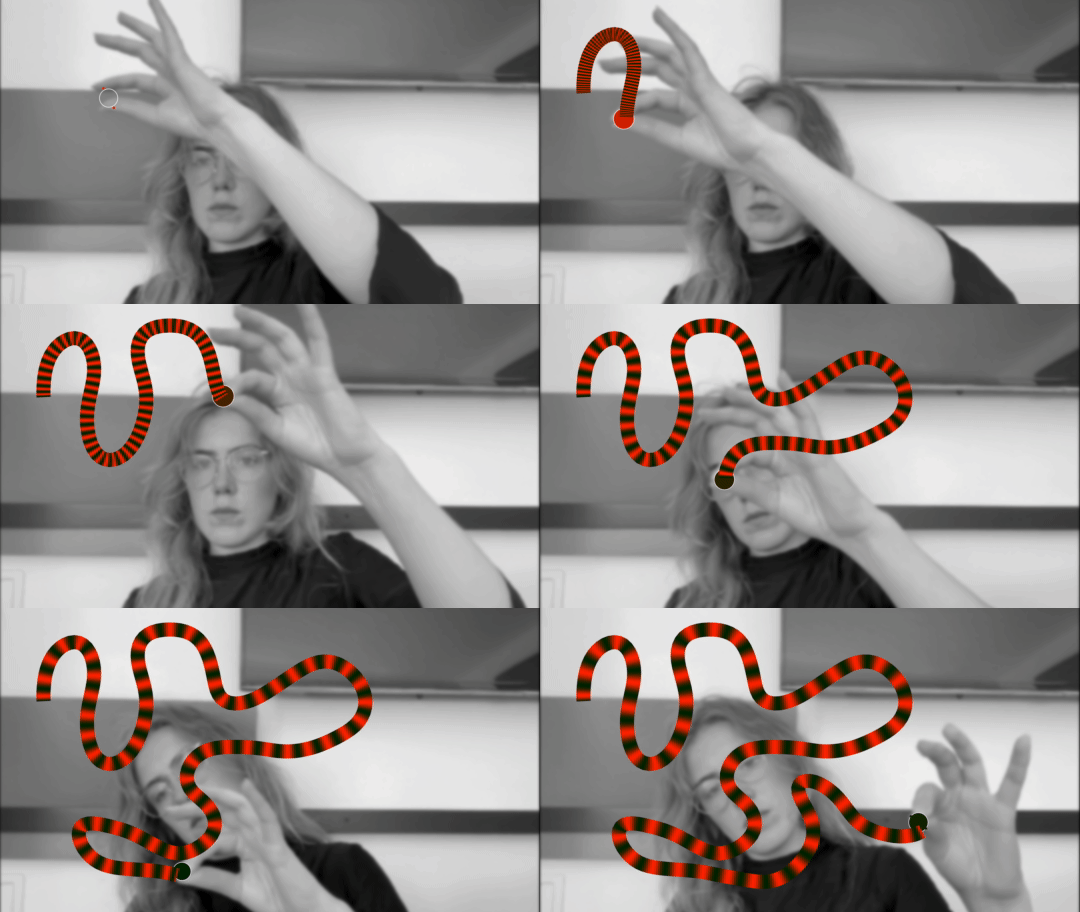
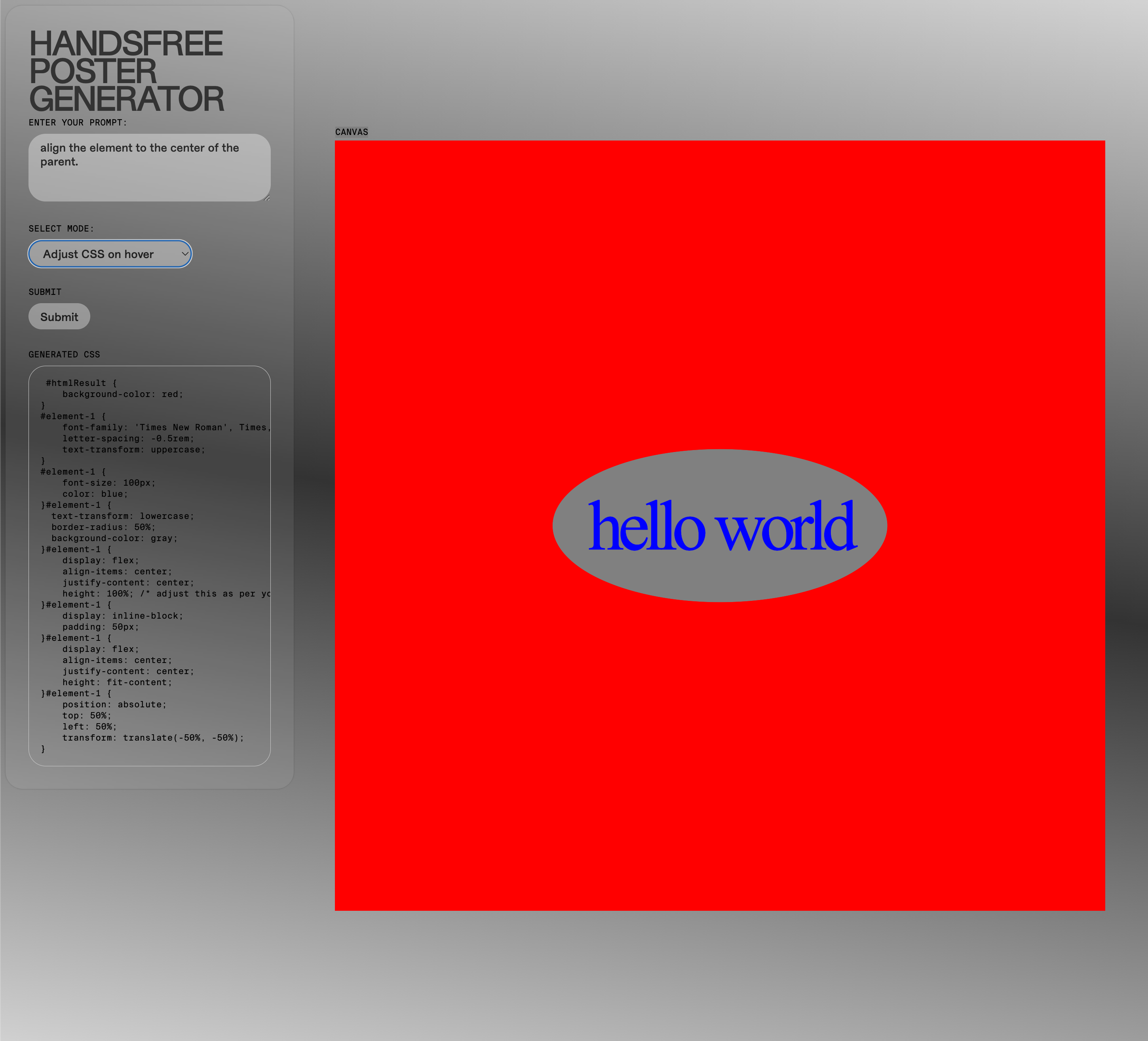
While many AI frameworks are relatively ineffective for traditional forms of type design, they yield tons of potential to shape how and who designs the typography that shapes our world. This transformation has set into effect a paradigm shift that impacts the role of the type designer. The use of large, questionably sourced datasets in AI is already making us reconsider preconceived notions of authorship (A). It is also making us think about the way we interact with and create type design, and what that might look like without the desktop computer paradigm (B). As a result, the role of the designer is brought into question (C).
In this project, I propose a new understanding of how AI can influence type design meaningfully. (A) automation considers the tedious tasks that we might not want to do, (B) addresses interaction with computing, and (C) explores alternative modes of creativity.
I see a realm of possibilities for new type design tools that are accessible, experimental, collaborative, and will change the way we design type, and in turn, the shape of information in the modern world. What trace will this era leave in our letter shapes?
Motivation
Now is the time to figure out what the strengths of AI are and how we can use it in a good way without losing quality in illustration, quality in photography, or typography and graphic design.
—Marc Schütz, Schultzschultz
Type design is an exciting field for studying the impact of new technologies in communications because advancements like the printing press and the Apple Desktop computer have heavily influenced it. These technologies came with a specific approach to communication, that created limitations that typography had to meet [Seddon 2015]. Like a palimpsest, traces of previous technologies are found in new forms of media.
However, each innovation acts as a double-edged sword. It gives new ways of making and creating in exchange for dictating what society feels is useful or necessary to learn [Esmaeilzadeh 2023]. For example, as computers have become a more common part of primary education, schools are witnessing the slow death of cursive writing. Technology challenges what we value as a society, oftentimes because technology makes something easier to make to perform. In short, “We shape our tools and thereafter our tools shape us” [Culkin 1967].
Deprecated: ProcessWire\Pageimage::extras(): Implicitly marking parameter $value as nullable is deprecated, the explicit nullable type must be used instead in /var/www/vhosts/veravandeseyp.com/type.veravandeseyp.com/wire/core/Pageimage.php on line 1779
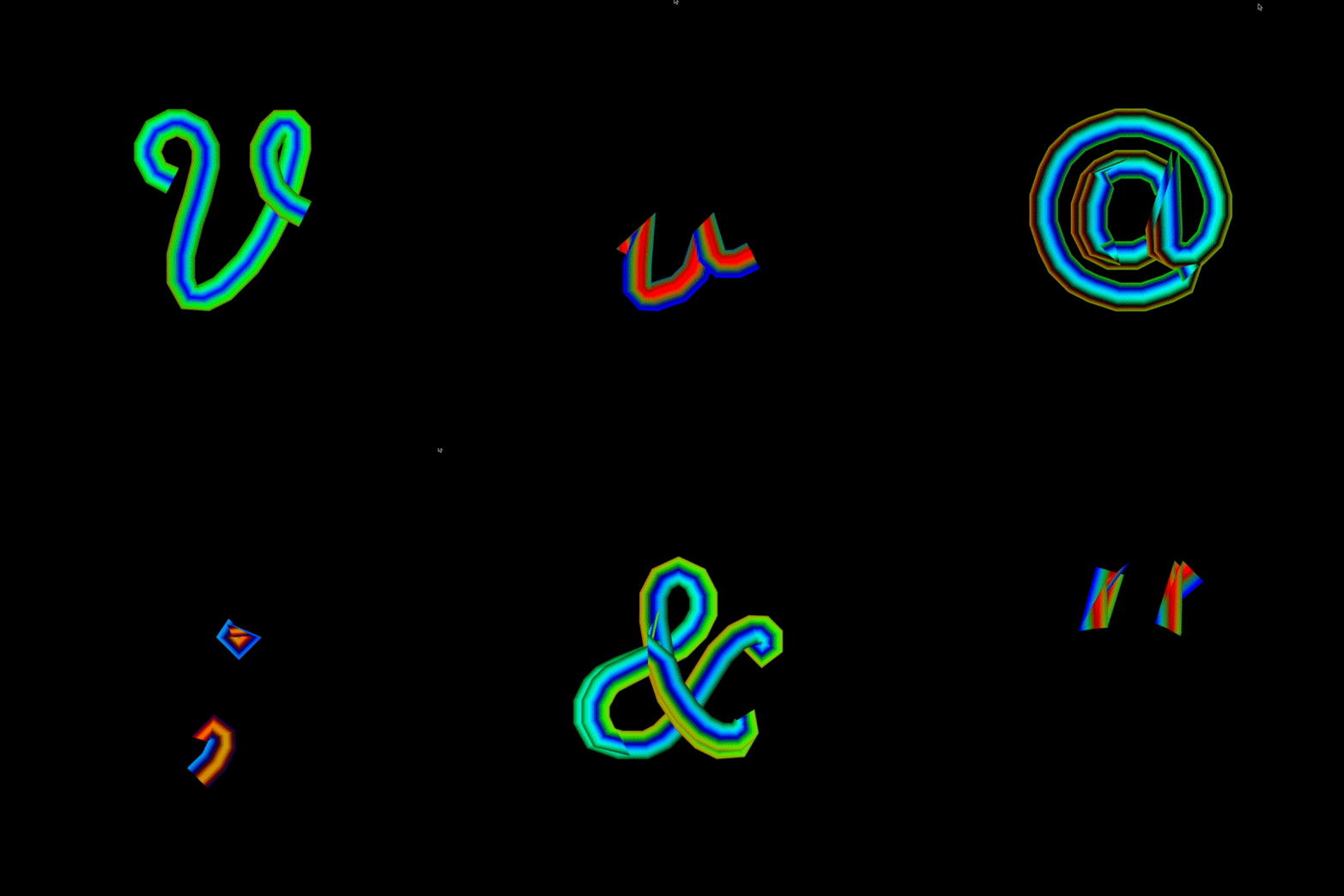
 From The Hershey Fonts, Frank Griesshammer (2016)
Objective
In this project, I created a series of computational experiments that offer experimental, intuitive, and playful ways to approach type creation and manipulation. Aside from publishing these experiments and this text online and sharing them through interviews, surveys, workshops, and talks, I want to advocate for a collaborative and democratic approach to type design with AI. Through the combination of these elements, I hope this project stands as a sketch for the future [Cooper 1980].